WHERE ALGORITHMS MEET IRON
Grounding AI-Priori
in Industrial Reality
AI-Priori’s board appointment signals a deliberate shift toward industrial
intelligence grounded in machinery and its operational reality.
Built for Industry. Not Adapted to It.
AI-Priori builds machine and asset intelligence for industrial operators; port terminals, manufacturing plants, and equipment fleets; where the cost of a poor decision is measured in downtime.
Our platform, DataPX1, integrates machine-level data across performance, maintenance, supply chain, and energy operations. It is designed not to report what happened, but to drive decisions that prevent it from happening again. That distinction between observation and accountability defines everything we build.
Today, we are pleased to welcome Pekka Yli-Paunu to the AI-Priori board of directors.

Pekka Yli-Paunu
Board Member, AI-Priori || Former Research Director, Kalmar (Previously Cargotec) || Industrial AI Researcher
For over three decades, Pekka Yli-Paunu has worked in environments that tolerate neither interruption nor delay. As former Research Director at Kalmar, previously part of Cargotec, he led innovation across port and terminal operations, where uptime is a commercial obligation and inefficiency translates directly into revenue loss per hour.
His expertise is highly specific, including sensor degradation under variable weather conditions, mechanical wear in complex automation systems, and the behavior of interacting components under conditions that no simulation fully replicates. His research with Tampere University has contributed to how industrial AI is studied and applied, bridging academic rigor with execution in the field.
This appointment formalizes a collaboration already reflected in the direction of DataPX1.
“The opportunity I see at AI-Priori is specific. Industrial operators are sitting on more machine data than ever, but most of it goes unused because the systems interpreting it were not built by people who deeply understand what the machines are actually doing. AI-Priori is changing that. I joined because I believe this is where the gap gets closed.”
— Pekka Yli-Paunu, on joining the AI-Priori board
Why Industrial AI Keeps Falling Short
Industrial AI has matured technically. Deployment outcomes in heavy industry have not kept pace.
The gap is not computational, it is contextual. Most platforms are built far from the physical environments they aim to optimize. They detect anomalies without explaining their cause. They identify patterns without connecting them to operational consequence. In a warehouse management tool, that is tolerable. On a port terminal or in a manufacturing plant, it is not.
An operations director facing a throughput problem does not need another alert. They need to understand why a specific machine is underperforming, how that failure propagates through the production flow, and what the cost is in energy, maintenance, and output simultaneously. Most platforms treat these as separate problems. Industrial systems do not operate that way.
“Machines don’t operate in isolation. Performance, maintenance, energy, and supply chain, they are all interconnected. If your AI does not understand that system, it will always give incomplete answers.”
— Pekka Yli-Paunu
DataPX1: From Insight Layer to Decision Layer
PERFORMANCE
5–15%
OEE Improvement
MAINTENANCE
20–40%
Unplanned Downtime Reduction
SUPPLY CHAIN
15–30%
Inventory Reduction
ENERGY
10–20%
Energy Consumption Reduction
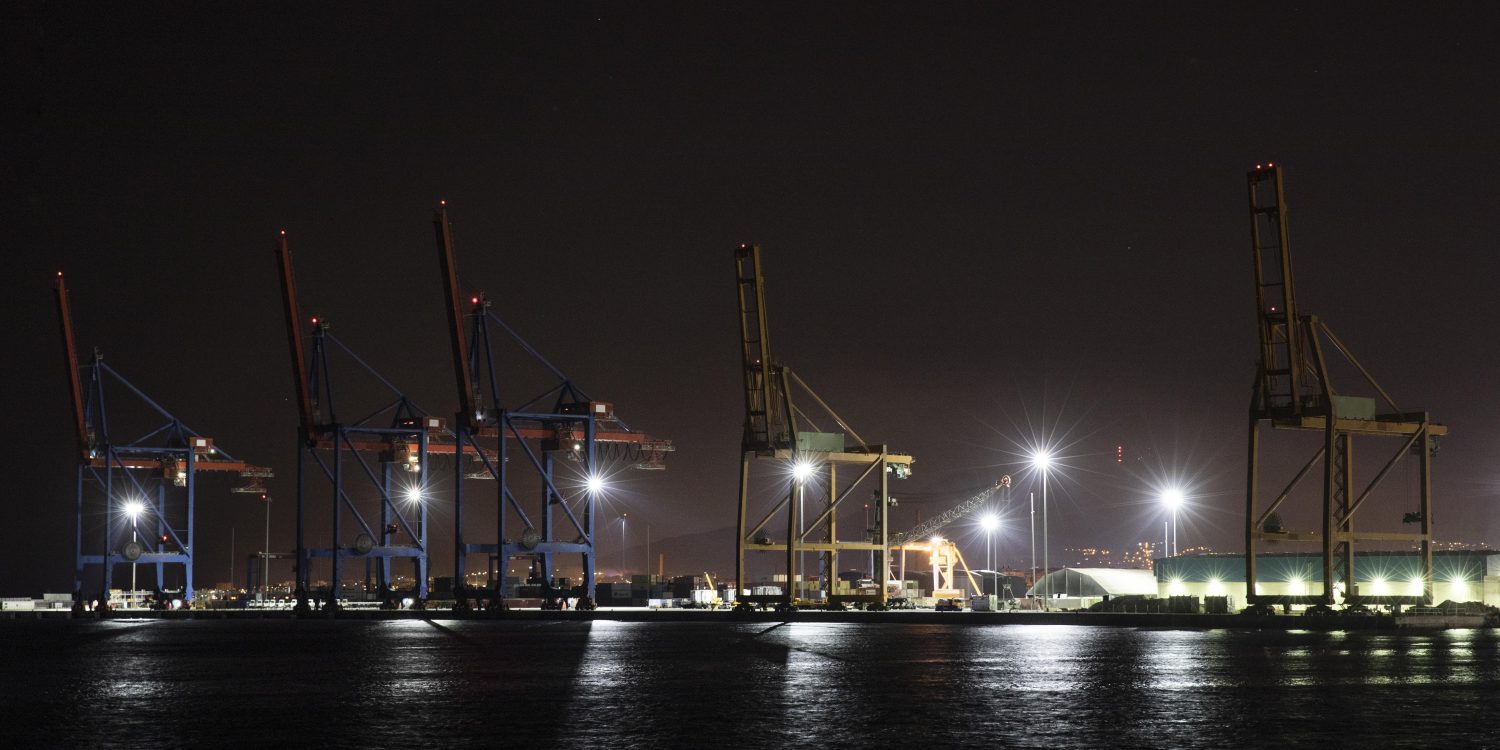
In automated container terminals running mixed equipment fleets are among the most demanding environments for any AI system. DataPX1 has demonstrated the ability to detect performance degradation weeks before it manifests as downtime, and to connect those signals to maintenance, energy, and throughput impact within a single operational view. The result is not just better reporting. It is better decisions, made earlier, with greater confidence.
“AI must move from reporting problems to resolving them. Pekka ensures we are building for decisions that operators can trust in real conditions, not just insights on a screen.”
— Swap M, CEO AI-Priori
The Bridge Between Silicon and Steel
What Pakka Yli-Paunu brings that no dataset can replicate is the ability to translate between two cultures that rarely communicate well.
Software teams optimize for speed and scalability. Industrial operations demand predictability and mechanical integrity. Without someone who understands both, AI systems tend to be built for the former while deployed in the latter. Yli-Paunu closes that gap, grounding platform decisions in operational truth, understanding failure modes before optimizing for performance, and ensuring that every signal DataPX1 surfaces can be connected to a physical reality an operator can act on.
His appointment also anchors AI-Priori more firmly in Finland’s Tampere region, one of Europe’s most advanced ecosystems for and strengthening the company’s position with European OEMs at a moment when the pressure on industrial operators is intensifying from every direction: uptime expectations, emissions targets, and supply chain volatility that shows no sign of stabilising.
“AI should not add complexity to operations. Its role is to make complex systems understandable and controllable.”
— Pekka Yli-Paunu
What Comes Next
Industrial AI is entering a phase where credibility is earned in operations, not in demonstrations. The platforms that endure will be those built by people who understand what breaks, why it breaks, and what is at stake when it does.
With Pekka Yli-Paunu’s judgment embedded at board level, AI-Priori is moving DataPX1 into its next phase of development, one focused not on adding capability, but on deepening the layer where insight becomes action. For industrial operators navigating near-perfect uptime demands, tightening emissions regulations, and supply chains that require real-time intelligence, that capability is not a future ambition.
YOUR OPERATIONS
Stop Managing Downtime.
Start Preventing It.
DataPX1 is already helping industrial operators detect failures weeks before they happen.
See what that looks like for your terminals, plants, or equipment fleet.